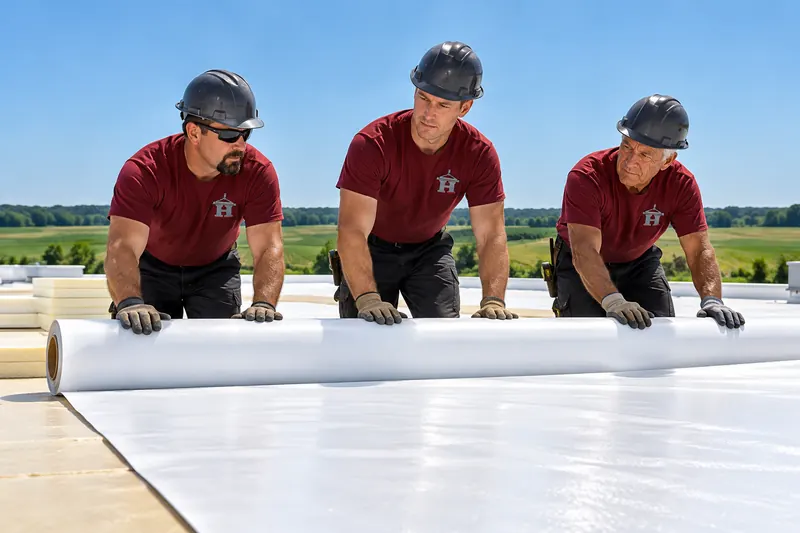
Exhaust
Softened Sheet at Fans
Oil and grease from exhaust fans soften standard membrane in a fan-shaped patch downwind of each discharge.

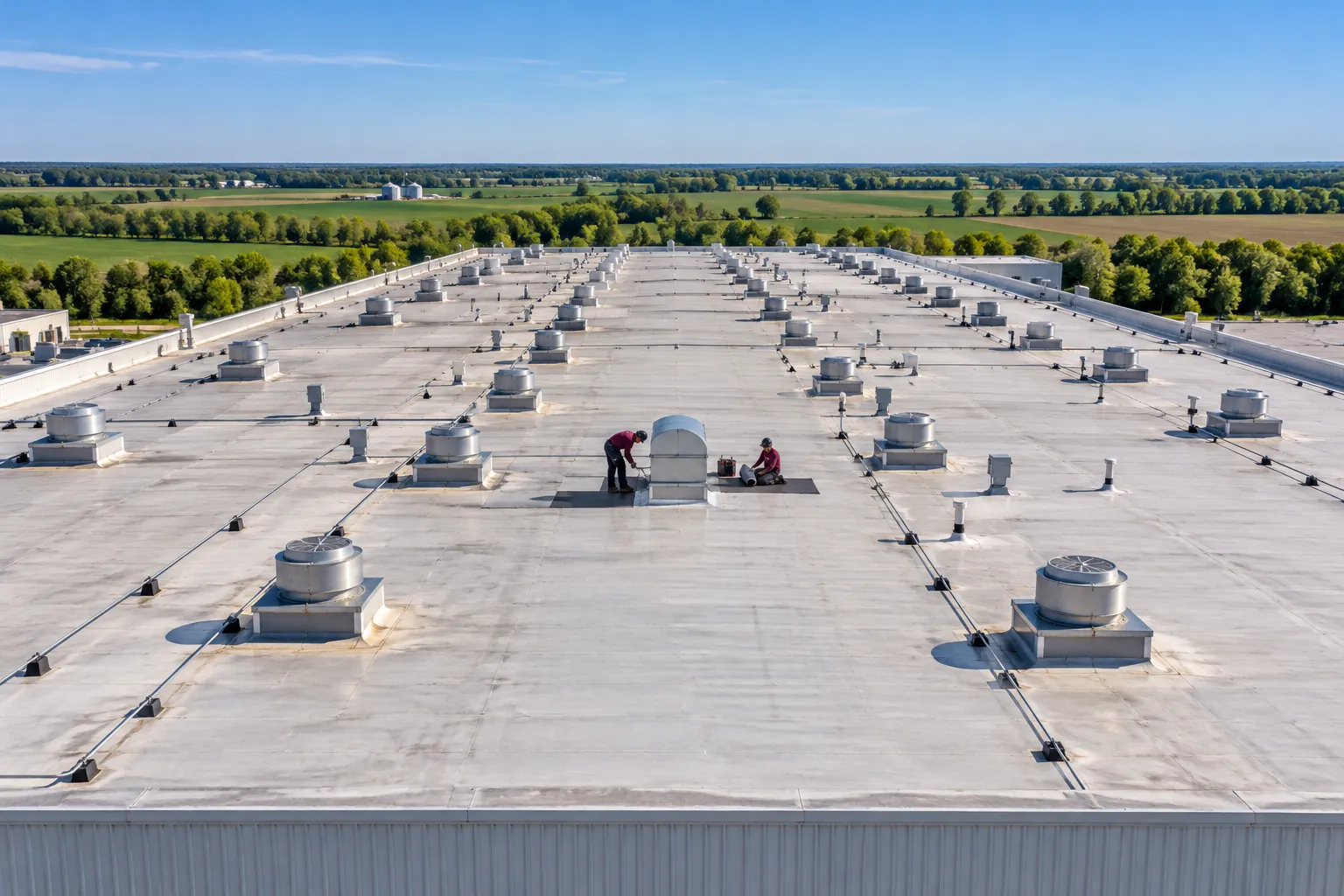
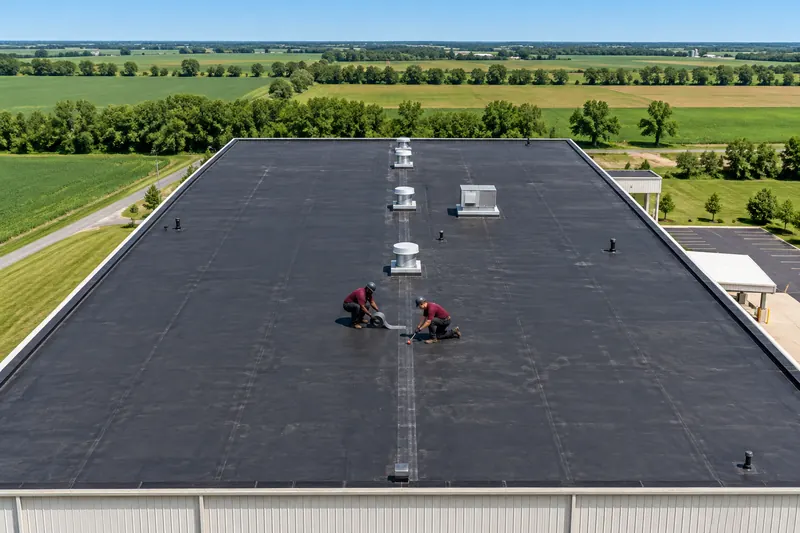
We work as a Hopkinsville industrial roofing contractor on plant roofs, phasing each tear-off around production lines, rooftop units, and exhaust fans.
A Hopkinsville industrial roofing contractor picks plant membranes by what lands on the roof. Fan discharge areas matter most.
A plant roof can mix membranes, with resistant sheet near the fans and TPO across the field, as long as the two join compatibly at the seams.
Plant roofs wear in predictable spots. These six get the closest look on every walk.
Oil and grease from exhaust fans soften standard membrane in a fan-shaped patch downwind of each discharge.
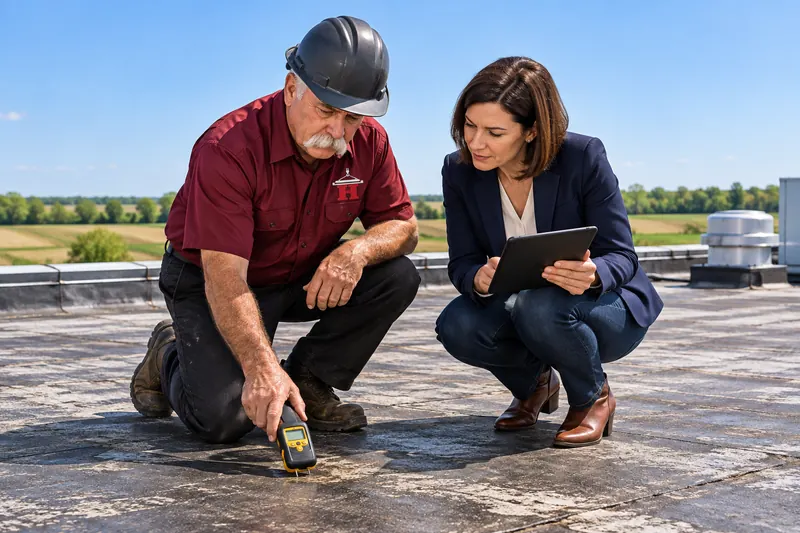
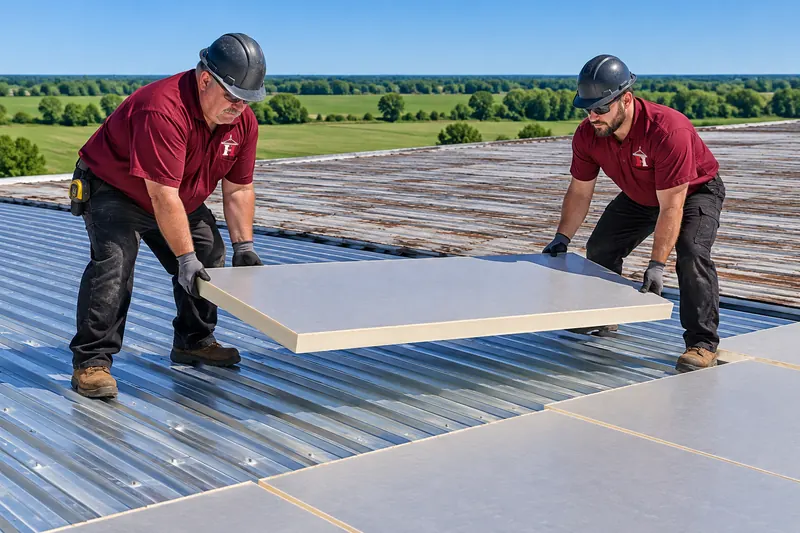
Makeup air units and big rooftop units leave too little curb height once new insulation raises the roof.
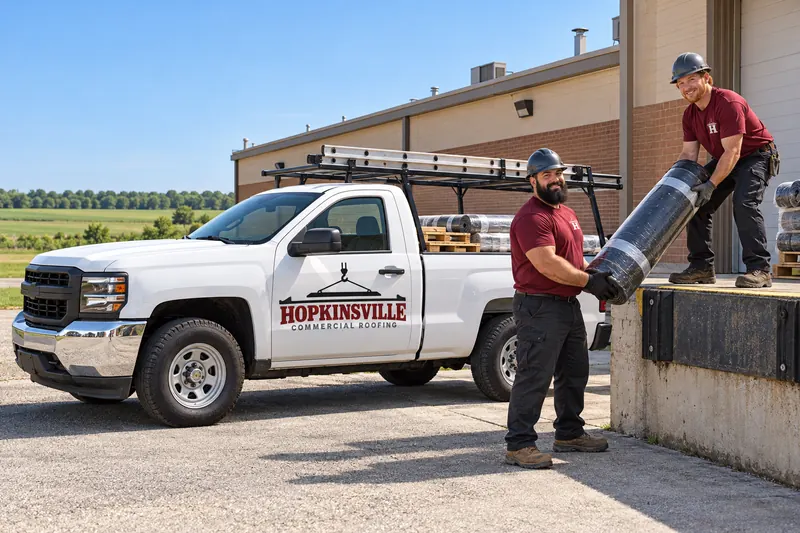
Conduit and gas lines on loose supports rub through the membrane as the plant vibrates.
Weekly maintenance trips wear a line across the roof from the hatch to each disconnect.
Large spans move at the joints between building sections, splitting covers that were built too stiff.
Skylights beside a walking route need marked paths that keep foot traffic away from them.
Plant roofs get built around the equipment on them. These four pieces come up on most jobs.
Resistant sheet goes around grease and process fans, tied into the field membrane at compatible seams.
Pads run from the hatch or ladder to each unit, fan, and disconnect, welded or adhered so they stay put.
Curbs too short for the new roof get extended, with the mechanical contractor lifting and resetting the units.
Gas lines, condensate drains, and conduit get their own flashed supports so they stop wearing the sheet.
Here is a plant roof before and after it is detailed around the units and fans on it.
Grease on the roof softens standard membrane fast. A walk around each fan shows how far the damage reaches and which sheet fits there.
Get A Free EstimateFive decisions, made with the plant manager before tear-off starts.
Core cuts, a moisture survey, and a map of every unit, fan, pipe rack, and expansion joint come first.
Grease, oil, and vapor areas get resistant sheet, and the rest of the roof gets TPO or EPDM.
Each tear-off section of roof is agreed with the plant manager, with the roof over critical equipment set for planned downtime.
The mechanical contractor shuts down and disconnects units, curbs get raised, and units are reset and restarted.
Dust control over clean areas, fire-watch rules near combustible dust, and a watertight close each evening.
Plant campuses often mix roof types. These pages cover the other buildings.
Warehouses and offices on the same campus usually take welded TPO over tapered insulation.
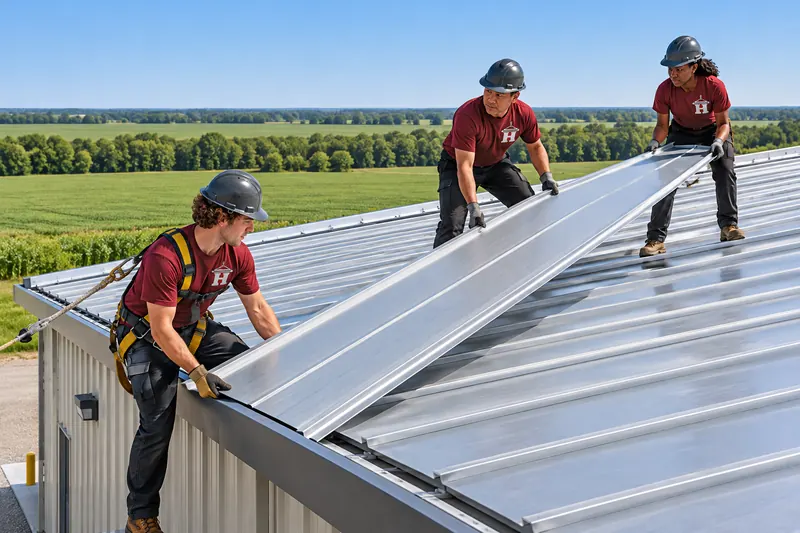
TPO roofing for warehousesPitched plant buildings and storage sheds take standing seam or R-panel metal.
Standing seam metal for plantsA puncture near a unit or a split at an expansion joint gets repaired without a full tear-off.
Plant roof repairQuestions plant managers ask before a roof replacement starts.
More equipment, more foot traffic, and more exposure to heat, grease, and process exhaust. Heavy units on tall curbs, oily fan discharge, pipe racks, weekly service trips, and expansion joints all call for thicker sheet, pads, or reinforced flashing.
PVC and other oil-resistant sheets hold up near grease and process exhaust, while standard TPO and EPDM soften or swell with long oil contact. Kitchen grease also gets a containment unit at the fan.
Yes, in phases. Each section over a working area is closed before the crew leaves, dust is controlled over clean rooms and electrical gear, crane lifts are set for shift changes or weekends, and critical areas get planned downtime.
Most stay on their curbs. The mechanical contractor shuts them down, curbs too short for the new insulation get extended, flashing is carried up and capped, and the units are reset and restarted.
Along the routes staff actually walk, from the hatch or ladder to each unit, fan, and disconnect, on the service side where panels come off. Bright pads also mark safe paths away from skylights and roof edges.
Sections over clean rooms, food lines, and electrical gear get planned first. Debris is bagged or chuted away from intakes, ceiling-hung equipment under the work is covered, and the plant manager signs off on each phase before that part of the roof comes off.
Only under the plant fire-watch rules agreed before work starts. Those rules set where hot-air welding can run, who watches, and how long after welding the area is checked.
Share the production schedule and the rooftop equipment list. We will phase the roof around them.
Leave a name and number and we will call you about the roof.
Or call now: (270) 249-6124