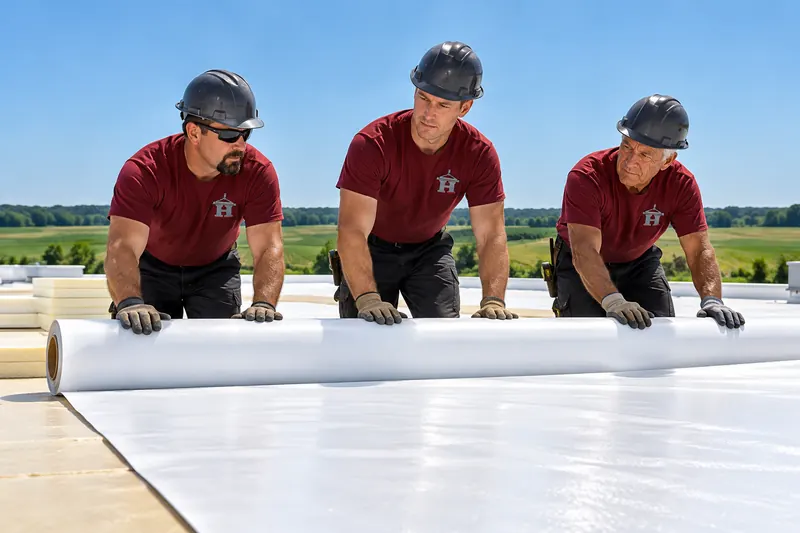
Laps
Lifted Tape at Lap Edges
Cracked lap sealant and tape lifting at the edge of a seam let water wick under the rubber.
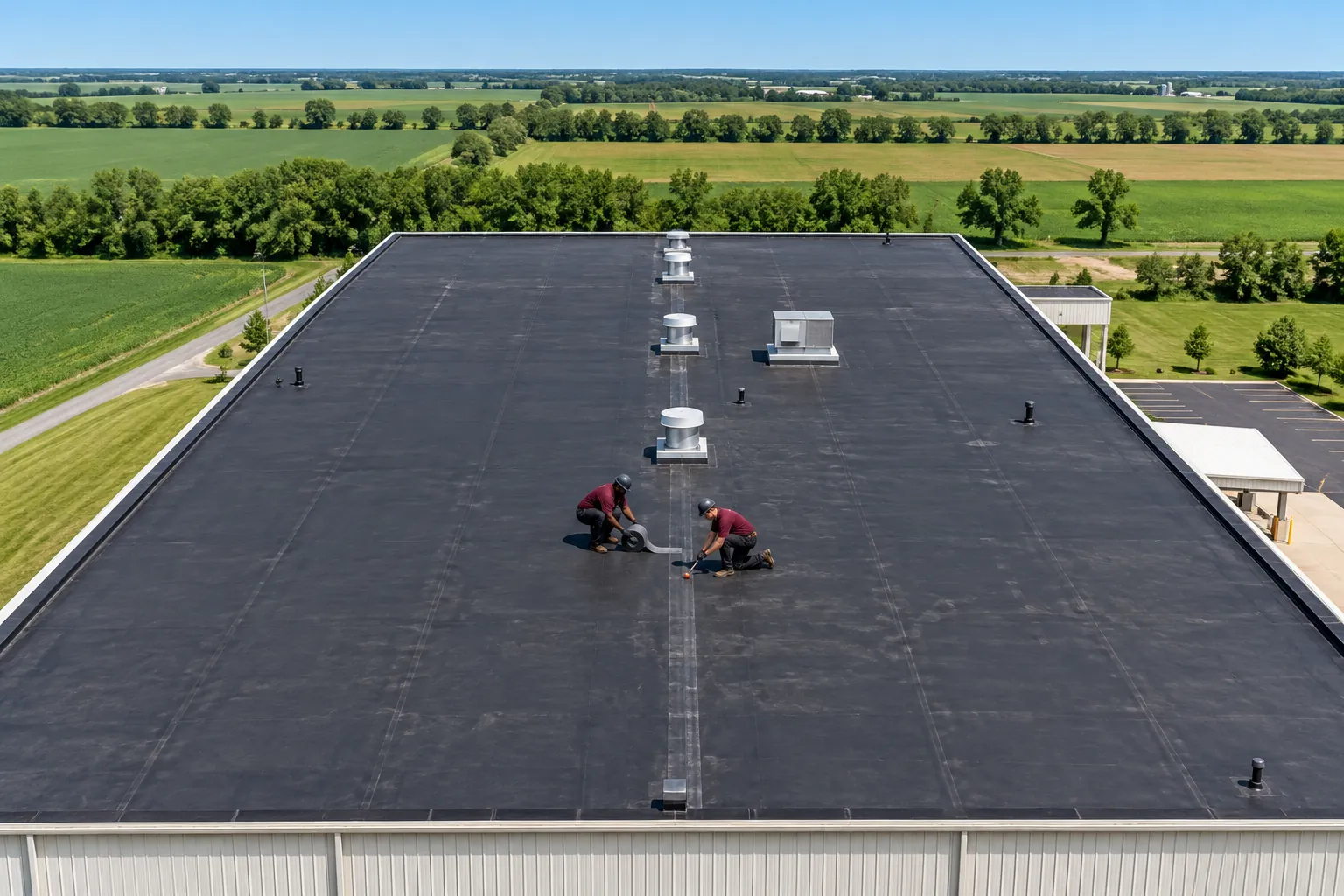
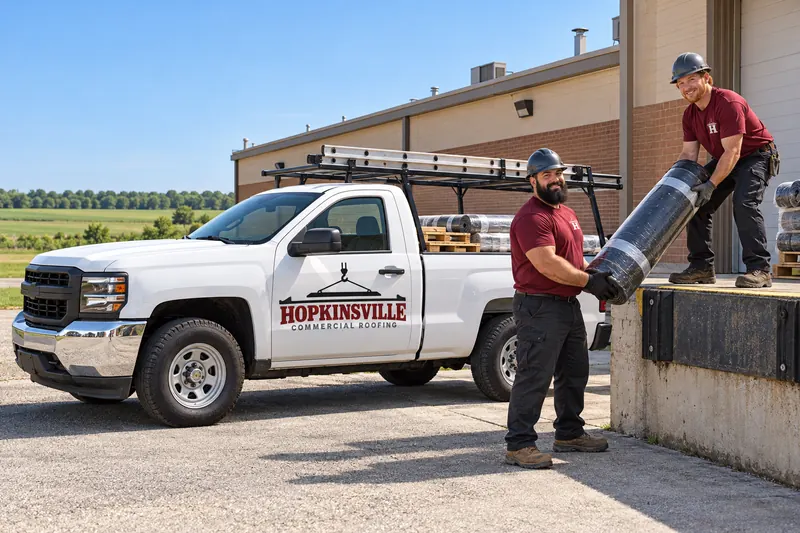
Working as a Hopkinsville EPDM roofing contractor, we install EPDM rubber roofs on warehouses, churches, schools, and plain commercial buildings.
The choice a Hopkinsville EPDM roofing contractor makes most is EPDM against welded TPO, or against pitched metal over retrofit framing.
Most EPDM trouble starts at the laps and the flashing, which is where these conditions show up.
Cracked lap sealant and tape lifting at the edge of a seam let water wick under the rubber.
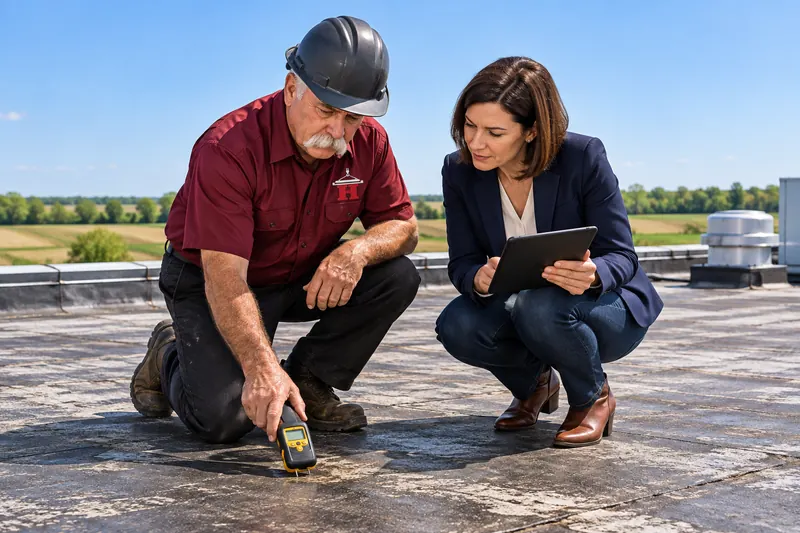
Rubber drawn taut at the base of a parapet is a sign of membrane shrinkage pulling on the flashing.
Leaves and grit in drains and scuppers hold water against seams that sit near the outlet.
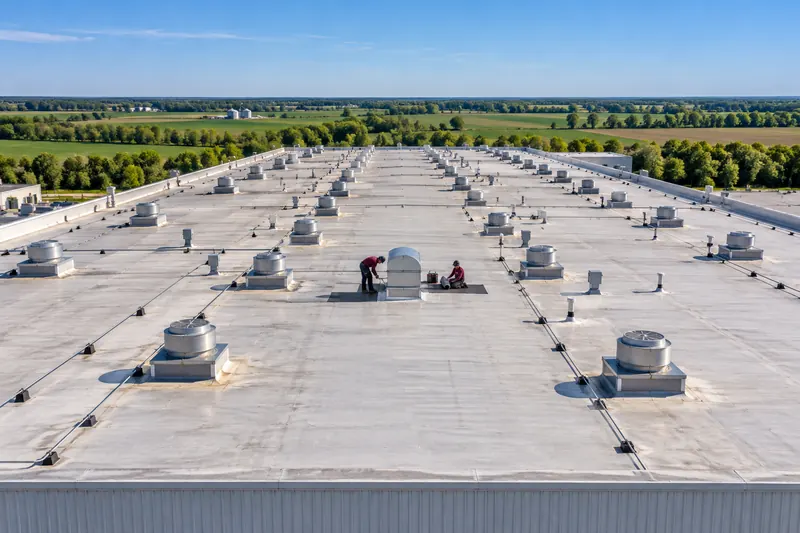
Service crews walking to rooftop units leave small holes in the rubber along the same path.
Stones blown off one area leave bare membrane exposed and pile up where they block drainage.
Old rubber boots that shrank away from the pipe leave a gap at the collar where water runs straight in.
EPDM goes on in a few ways. The deck, the old roof, and the wind exposure choose between them.
Adhesive across the whole sheet gives a smooth roof that stays put at curbs and walls.
Plates and screws in the laps hold the sheet to steel decks, with tighter spacing at corners and edges.
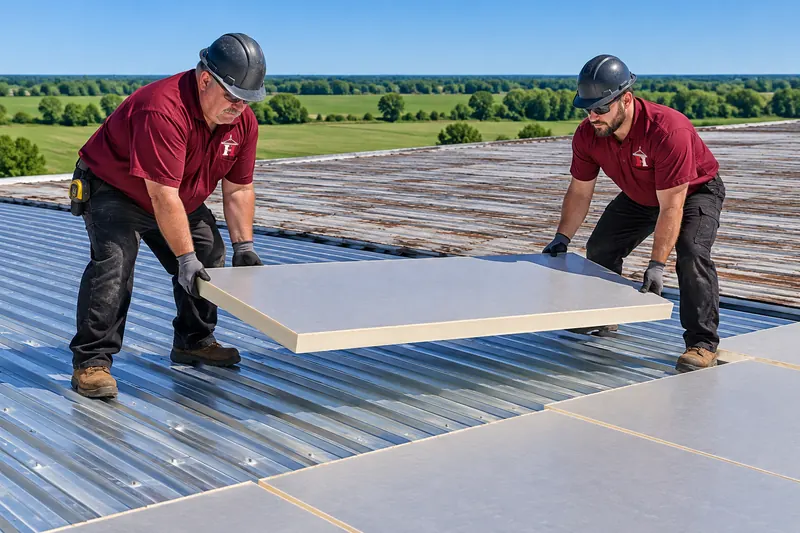
A dry old roof stays in place under fastened cover board, with blisters and wet patches cut out first.
A fleece backing on the rubber grips cover board well and stands up better to foot traffic near units.
Here is how an aging rubber roof compares with new EPDM laid in large sheets.
Rubber pulled tight at the wall base means the membrane is shrinking. Flashing that has started to tear usually goes with a new roof plan.
Get A Free EstimateFive decisions, in order, from the core cut to the last lap seal.
Core cuts and a moisture check show whether the old roof is dry enough to recover or needs to come off.
Blisters, wrinkles, and wet patches come out, and any section holding water goes down to the deck.
Cover board or new insulation gets fastened into the deck, with curbs and edge metal raised to clear it.
Laps are cleaned of dust and talc, primed, taped, and rolled, with cover strips at every T-joint.
Walls get termination bar and counterflashing, corners get uncured rubber, and every seam edge gets lap sealant.
EPDM is one answer for low-slope roofs. These pages cover the others.
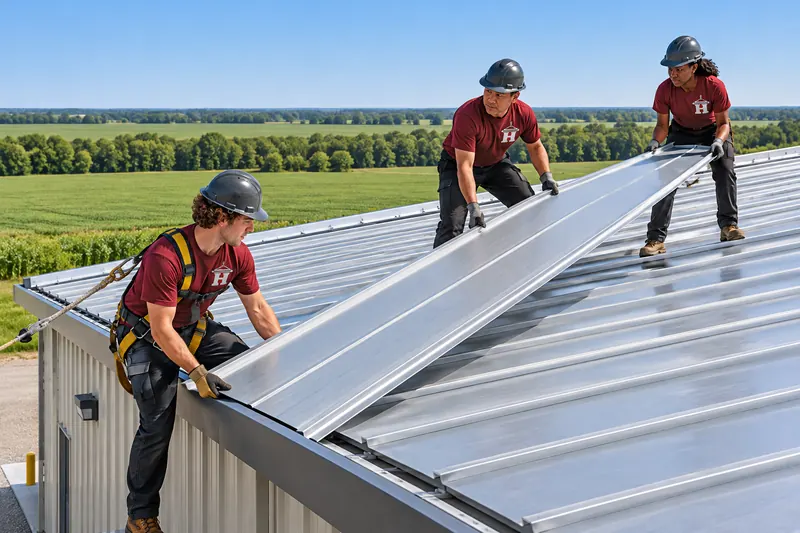
A roof full of curbs and pipes gets welded TPO, since the extra flashing work narrows the EPDM advantage.
TPO roofingA few lifted laps or a torn boot on a sound rubber roof are repaired with primer, tape, and sealant.
Rubber roof repairA flat roof turned pitched with retrofit framing trades membrane for metal panels.
Metal roofing and retrofit framingEPDM questions, answered for rubber roofs on commercial buildings.
EPDM is synthetic rubber, black on most roofs and white on some, made in very large sheets. It is picked for wide roofs with simple layouts, for its flexibility in cold weather, and for repairs that use the same tape and primer years later.
Both laps are cleaned of dust and talc and primed. Once the primer flashes off, the tape is set and rolled with a silicone roller, cover strips go on at T-joints, and lap sealant runs along each seam edge and splice.
Yes, when the old roof is dry and the deck holds fasteners. Blisters and wet patches are cut out, cover board or insulation is fastened down, the rubber goes on, and curb flashing and edge metal are raised to clear the new height.
Cured rubber runs up straight walls under a termination bar and coping or counterflashing. Curbs get cured rubber on the sides and uncured rubber at corners. Pipes get molded boots with clamps, and drains are set in sealant under the clamping ring.
A walk twice a year and after big storms, looking at lap edges, flashing at wall bases, drains and scuppers, punctures near units, and moved ballast. A photo log of each visit makes changes easy to spot.
Yes. EPDM is black on most roofs and white on some, and the white sheet goes on wide, plain roofs where a lighter surface is wanted. Laps, flashing, and upkeep follow the same primer, tape, roller, and sealant steps either way.
Tell us the roof size and how many units sit on it. We will check whether large rubber sheets fit the layout.
Leave a name and number and we will call you about the roof.
Or call now: (270) 249-6124