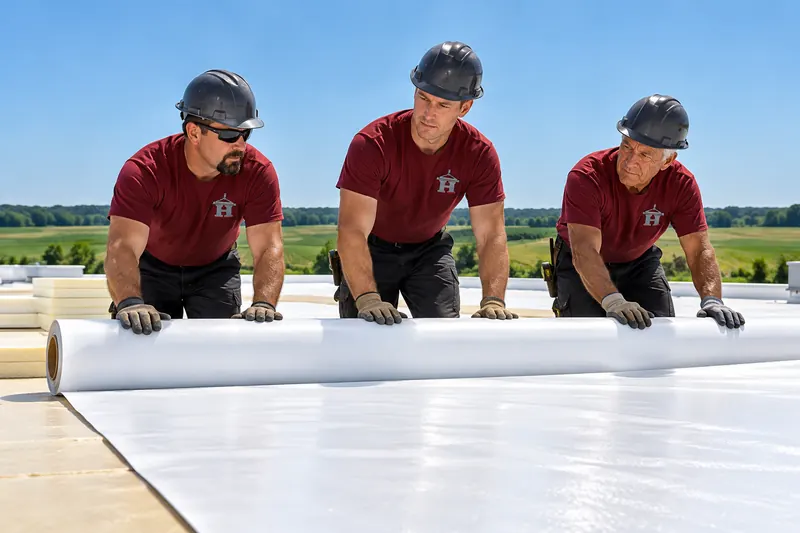
Membrane
Split or Open Laps
A lap that lifted along a TPO weld or an EPDM tape seam lets water run under the sheet before it drips inside.


A Hopkinsville commercial roof repair contractor traces each leak from the ceiling stain back to the seam, screw, or flashing that let water in.
Hiring a Hopkinsville commercial roof repair contractor makes sense when damage sits in a few places. This table shows where repair ends.
These six conditions are where a repair call starts, and each one points to a specific detail on the roof.
A lap that lifted along a TPO weld or an EPDM tape seam lets water run under the sheet before it drips inside.
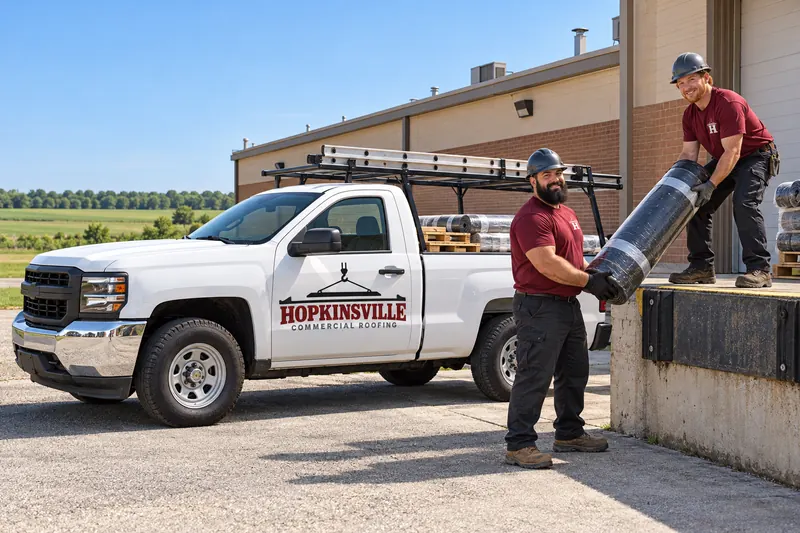
Cracked rubber boots and loose clamps around vent pipes leak in a ring right at the pipe.
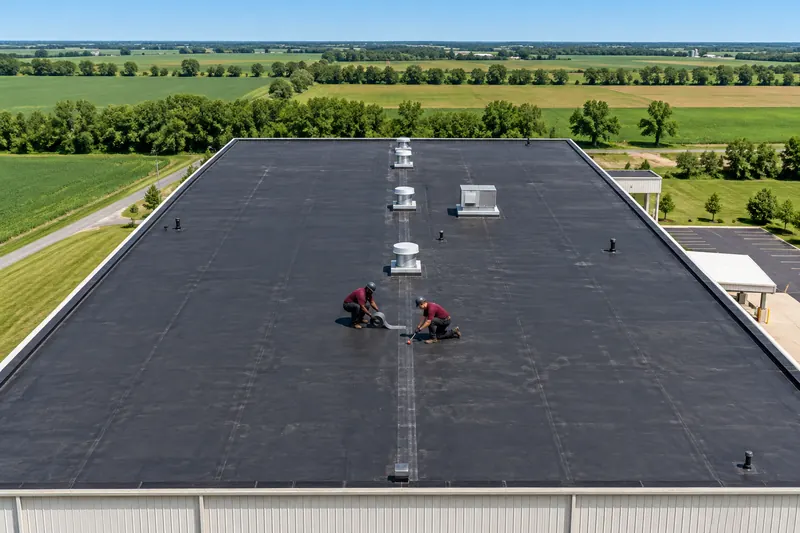
Flashing that pulled away under a rooftop unit cap sends water down the curb wall into the building.
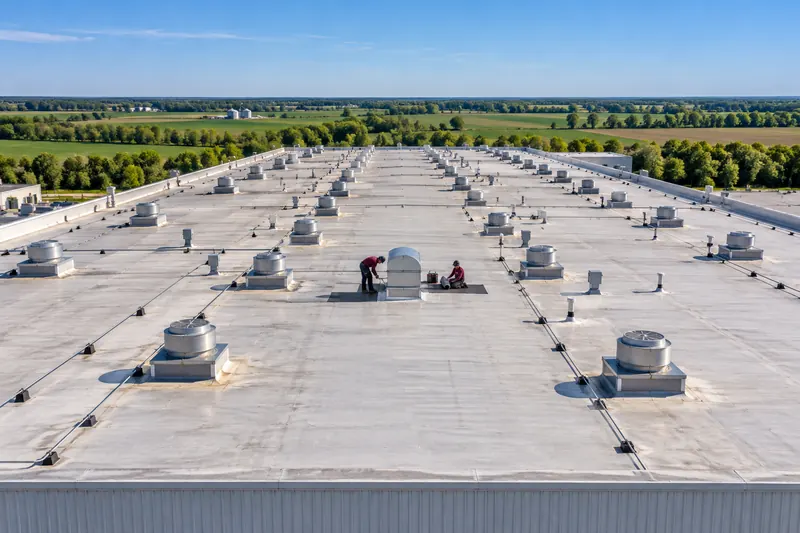
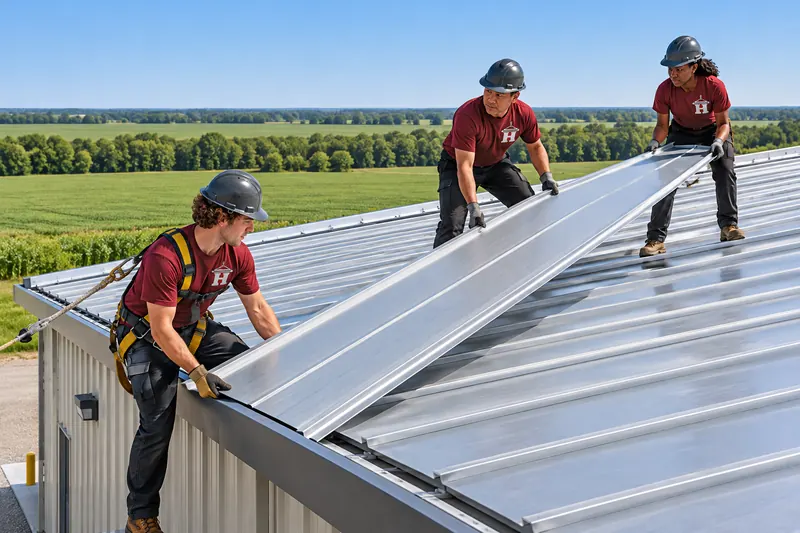
Heat and cold push metal panels back and forth until screws loosen and washers crack at the panel face.
Water entering under the membrane at a drain bowl stains the ceiling straight below the drain line.
Dropped tools and boots from service visits puncture the sheet along the path to rooftop units.
Each repair matches the system already on the roof, so the patch holds the same way the original did.
New TPO is heat-welded over a cleaned, open lap or puncture, then the whole weld is probed for gaps.
Primed rubber and seam tape cover splits and holes, with lap sealant along every exposed edge.
Stripped screws get replaced a size larger, rusted panel sections are lapped in, and end laps get fresh butyl tape.
Curb, wall, and pipe flashing is rebuilt where it tore or pulled loose, and terminated under its cap or counterflashing.
Catching a leak while it sits at one detail keeps the job small. Compare the same roof both ways.
Call with the building address and where the drip is. Mark the spot inside so the roof detail above it can be found fast.
Call UsA repair visit answers five questions before any patch goes on.
We find the stain or drip inside, then follow the bay and purlin line up to the roof area directly above it.
Laps, boots, curbs, and drains near that spot are probed and looked over, since water often travels before it drops.
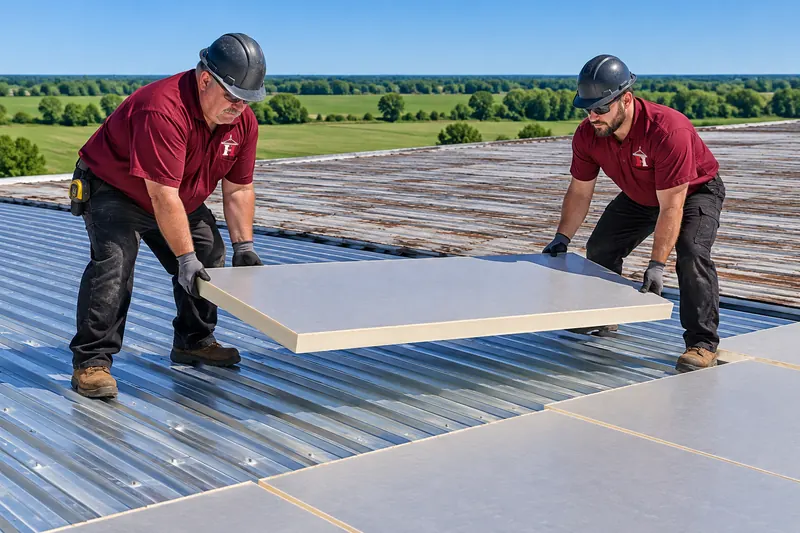
A dry, firmly attached roof gets the repair. Wet insulation around the leak means that section comes out instead.
Welded TPO, taped EPDM, or matching metal parts go back in, so the repair moves the way the roof around it moves.
Repaired welds are probed, sealant is checked, and photos of the fix go into the building roof file.
Some repair visits end with a bigger scope. These pages cover what comes next.
Leaks spread across a low-slope roof call for rebuilt drainage, new insulation, and a fresh membrane.
Flat roof replacementRoofs crowded with curbs and pipes do well with a welded TPO system once repair stops paying off.
TPO roof installationRust-holed panels across a shop roof point to new standing seam or R-panel, or retrofit framing over flat roofs.
Commercial metal roofingAnswers on leaks, patches, and when repair stops making sense.
Water runs along the deck flutes, purlins, or under the membrane before it finds a joint to drip through. Tracing starts at the stain and follows the deck upslope, checking every lap, boot, and curb on the way.
Yes, when the rest of the field is dry and firmly attached. The open lap is cleaned and welded or taped with matching material, then checked along its whole length. Core cuts near the leak confirm the insulation stayed dry.
Backed-out or stripped screws come out and new ones a size larger go in with fresh washers. Rust-holed panel sections are cut out and lapped with matching pieces, and end laps get new butyl tape.
When wet insulation, open seams, or rusted deck turn up across the roof instead of at a few spots. A moisture survey shows how much of the roof is wet, and that number usually decides it.
All three. Each repair uses the material and method of the roof already there: heat-welded TPO, primed and taped EPDM, or matching metal panels, screws, and sealant tape.
Move stock and equipment out from under the drip, set a bucket, and photograph the stain and the ceiling above it. Note when it started and whether it drips only during rain or for hours after. Those notes help trace the water back to the roof detail faster.
Tell us where the water shows up inside. We will trace it to the roof detail and fix that part.
Leave a name and number and we will call you about the roof.
Or call now: (270) 249-6124